
Aluminum Multi-Axis CNC
High-Precision Multi-Sided Aluminum CNC Machining
CNCALPARTS specializes in producing complex aluminum components that require features on multiple faces. By utilizing 4-axis indexing and 5-axis positioning, we reduce the number of setups required for a single part. This approach minimizes the error accumulation associated with manual re-fixturing and ensures superior geometric relationships between features on different sides of your aluminum parts.
- Position Tolerance
- ±0.02 mm
- Hole Tolerance
- ±0.01 mm
- Min Wall
- 0.5 mm
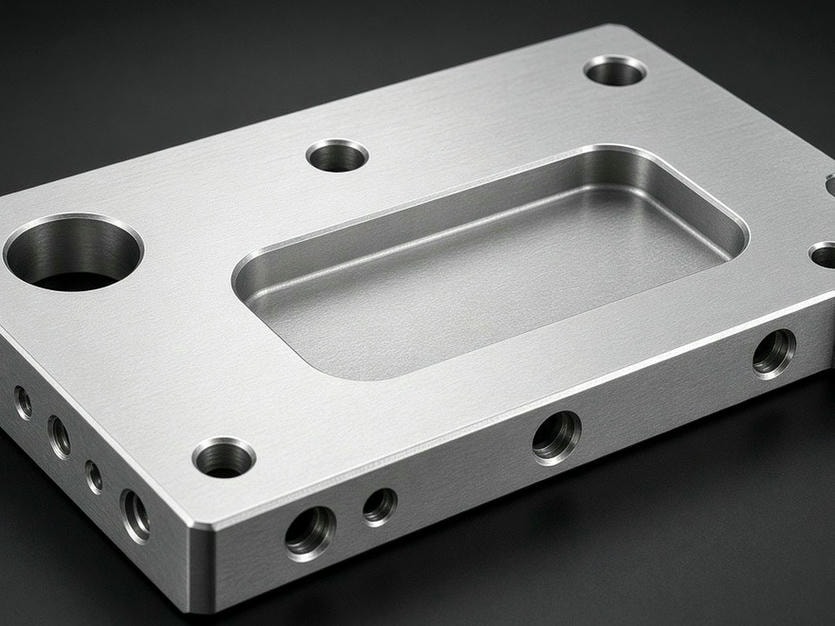
Precision Through Multi-Sided Machining
Every re-fixturing step adds risk. Multi-sided machining removes it.
Traditional 3-axis machining often necessitates multiple setups to access different sides of a component. Each time a part is removed from a fixture, flipped, and re-clamped, there is a risk of losing datum consistency. For aluminum parts requiring tight position tolerances—such as housing interfaces, manifold port alignment, or bracket mounting holes—these small variances accumulate.
Our multi-sided machining processes maintain the part in a stable coordinate system for as many features as possible. This reduces handling, shortens production cycle times, and provides the dimensional stability required for high-precision assemblies.
Our 4-Axis and 5-Axis Capabilities
We employ advanced CNC technology to handle complex geometries that simple 3-axis mills cannot process efficiently.
4-Axis Indexing
Used primarily for parts requiring features around a central axis or multiple faces that can be reached by rotating the part. This is ideal for precision turned-milled parts, motor housings, and shafts.
5-Axis Positioning (3+2)
This allows us to lock the part at specific compound angles to machine features that are not parallel or perpendicular to the standard axes. It is highly effective for complex aluminum enclosures and brackets, allowing access to deep pockets or angled holes in a single setup.
By focusing exclusively on aluminum, we have optimized our tooling and cutting parameters for these multi-axis movements, ensuring high surface quality and minimal vibration during complex tool paths.
Engineering Advantages for Complex Components
Multi-sided machining is more than a production efficiency strategy; it is an engineering requirement for many of the parts we manufacture.
Improved Position Tolerance
Maintaining a single datum reference across multiple faces allows us to achieve position tolerances down to ±0.02 mm between features on different sides.
Reduced Deformation
Aluminum is susceptible to stress release during machining. By reducing the number of times a part is clamped and unclamped, we decrease the likelihood of inducing stress-related distortion in thin-walled sections.
Enhanced Cosmetic Finish
Fewer setups mean fewer opportunities for handling damage. This is critical for parts that undergo clear or color anodizing, where surface blemishes are highly visible.
Technical Specifications
We support production from prototypes to batch manufacturing using a range of aluminum alloys.
| Capability | Specification |
|---|---|
| Primary Material | Aluminum Alloys Only (6061, 7075, 5052, etc.) |
| Machining Types | 3-Axis, 4-Axis, 5-Axis (3+2) |
| Max Milling Size | 1000 × 600 × 500 mm |
| Position Tolerance | Down to ±0.02 mm |
| Hole Tolerance | Down to ±0.01 mm |
| Flatness/Parallelism | Down to 0.02 mm |
| Surface Finish | Ra 0.8–3.2 μm |
| Min Wall Thickness | 0.5 mm |
Applications for Multi-Sided Aluminum Parts
We work with clients in robotics, automation, optics, and industrial electronics who require components with high geometric complexity. Common parts we produce using multi-sided machining include:
Precision Enclosures
Where internal mounting bosses must align perfectly with external connector cutouts.
Robotic Structural Components
Parts requiring complex features on multiple faces to integrate with sensors and actuators.
Optical Mounts
Where precise alignment of mounting holes relative to the optical axis is mandatory.
Manifolds and Fluid Blocks
Requiring internal channels and external port features with strict positional accuracy.
Quality Control for Multi-Faceted Parts
Because multi-sided machining involves complex tool paths, our inspection process is rigorous. We verify that the relationship between features on different faces meets your technical drawings.
Our quality team utilizes CMMs, height gauges, and specialized pin and thread gauges to validate dimensions after machining. For production runs, we provide First Article Inspection (FAI) reports and dimensional inspection reports to confirm that the multi-axis setup is holding tolerance consistently from the first piece to the last.
- CMM dimensional verification
- Height gauges and pin / thread gauges
- First Article Inspection (FAI) reports
- Dimensional inspection reports
Request a Quote
If your design requires complex, multi-sided aluminum machining, we are ready to assist. Please send your 3D models (STEP/STP format) and 2D technical drawings to our engineering team for a review. We will provide a DFM (Design for Manufacturing) analysis to ensure your parts are optimized for efficient production.
CNCALPARTS
Aluminum CNC Machining Specialists
We Machine Aluminum. Only Aluminum.
- Contact:
- info@cncalparts.com
- Location: