
Precision CNC Prototypes for Faster Design Validation
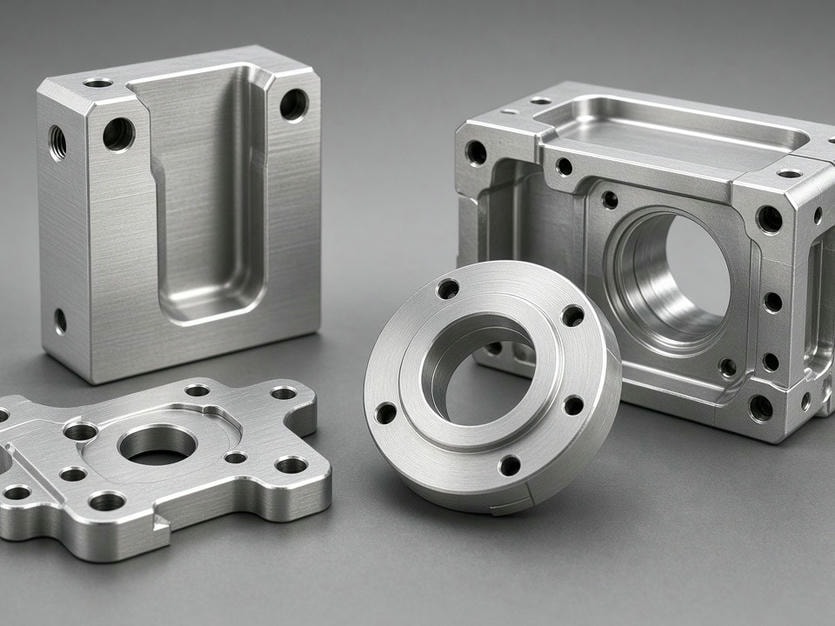
CNCALPARTS specializes exclusively in aluminum CNC machining for engineers and product designers who need functional prototypes with production-level technical rigor.
Validate structure, thermal performance, fit, finish, and assembly with real aluminum parts manufactured for demanding design iterations.
±0.01 mm
Precision tolerance
1–10 pcs
Prototype quantities
3 / 4 / 5-axis
Complex geometry support
Built for iteration
From first article review to low-volume production, your verified prototype remains the quality reference.
Why specialization matters
Aluminum expertise built into every setup
General machine shops may use tooling and workholding designed for harder metals. That can contribute to premature tool wear, material deformation, and inconsistent finishes on thin-walled aluminum components.
Our process is optimized around aluminum alloys. We manage heat and internal stress to help prevent warping in complex housings, heat sinks, and structural brackets, while optimized chip evacuation and coolant flow support tight tolerances on the first iteration.
Material focus
Aluminum-only production environment reduces cross-contamination risks.
Thermal control
Process control helps protect thin walls and complex profiles from distortion.
Repeatability
Stable methods support the transition from prototype to batch production.
Technical capabilities
From a first prototype to a production-ready process
Our 3-axis, 4-axis, and 5-axis machining capability supports complex geometries without unnecessary setups, while CNC turning and turn-mill machining cover rotational components.
| Capability | Typical range |
|---|---|
| Materials | 6061, 6063, 6082, 7075, 2024, 5052, 5083 aluminum alloys |
| CNC milling | 3-axis, 4-axis, 5-axis |
| CNC turning | CNC turning and turn-mill machining |
| Maximum milling size | 1000 × 600 × 500 mm |
| Precision tolerance | Down to ±0.01 mm |
| Hole tolerance | Down to ±0.01 mm |
| Surface roughness | Ra 0.8–3.2 μm |
| Minimum wall thickness | 0.5 mm |
| Prototype quantity | 1–10 pieces |
| Drawing formats | STEP, STP, SLDPRT, IGES, X_T, DWG, DXF, PDF |
Prototype to production
Validate the design without rebuilding the process later
Before the first chip is cut, we review your 3D models and engineering drawings for manufacturability. Early feedback on deep pockets, thin walls, and tool access helps reduce avoidable cost and lead-time issues.
01. Review
Assess models, drawings, material selection, and critical dimensions.
02. Refine
Identify DFM opportunities before machining begins.
03. Scale
Carry a stable prototype process into low-volume production from 10 to 500+ pieces.
Finishing options
Finish the prototype for its real job
Choose a finish based on whether the prototype is intended for internal components, functional testing, wear resistance, or customer-facing evaluation.
As machined
Natural CNC finish for internal or hidden components.
Bead blasting
Uniform matte surface that helps hide tool marks.
Anodizing
Clear, black, and custom colors for protection and appearance.
Hard anodizing
Increased surface hardness for robotics and automation parts.
Powder coating
Durable protection for housings and enclosures exposed to harsh environments.
Quality control
Every prototype is measured, not assumed
Every project is supported by dimensional inspection reports. For critical dimensions, our team uses CMMs, micrometer sets, bore gauges, and surface roughness testers to verify parts against your technical drawings.
First Article Inspection reports and specific tolerance verification can be integrated into the production flow from the start.
Dimensional inspection +
Critical dimensions are checked against engineering drawings and specified tolerances.
Surface verification +
Surface roughness testing supports requirements from Ra 0.8–3.2 μm.
FAI support +
First Article Inspection reports and project-specific verification requirements can be planned from project kickoff.
Request a quote
Move your aluminum design forward
Send your STEP or STP files with PDF drawings for an accurate quotation. Our engineering team can also advise on machining feasibility, thin-wall tolerances, and material selection.
Materials: 6061, 7075, and additional aluminum alloys
Applications: robotics, automation, and industrial technology
Location:
Email: info@cncalparts.com
Talk to our engineering team
Share your requirements and project files through the contact channel below.